INSIGHTS
AI Innovation Lab Challenges: What to Expect
Building an AI Innovation Lab? The real challenges are organizational, not technical. Here is what executives actually face: messy motivations, political resistance, and data decisions.
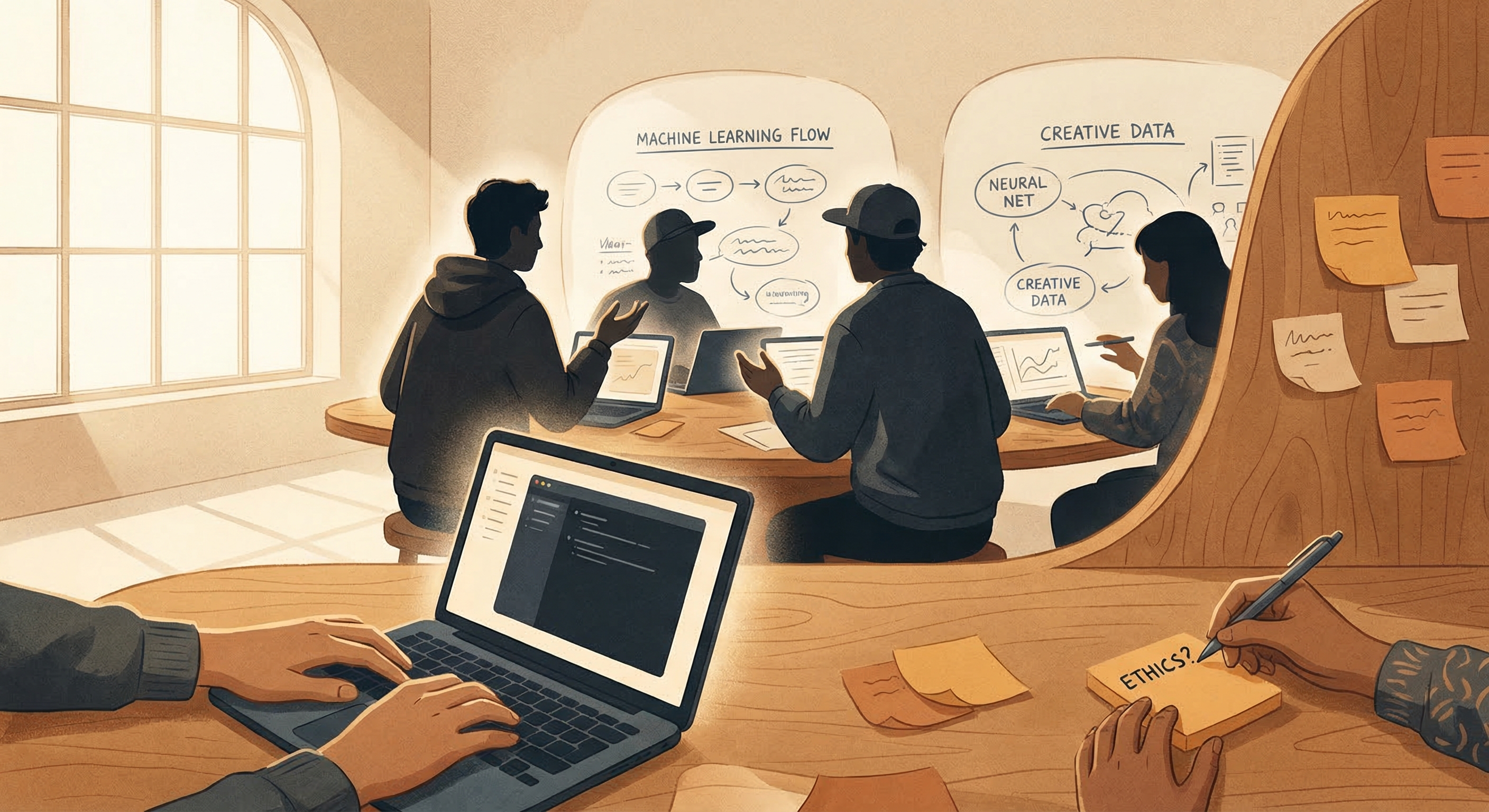
The honest answer nobody in a $500/hour suit will give you.
Let's skip the part where someone in a pressed blazer shows you a framework slide and calls it consulting.
If you're a senior executive thinking about standing up an AI Innovation Lab, you're already feeling pressure from every direction. The board wants guardrails. Your CEO wants speed. Your colleagues forward LinkedIn posts about competitors. Somewhere in the building, a department head quietly believes this is a threat to their headcount.
They have reason to worry. You have reason to push forward.
Here's what actually gets in the way.
1. The Motivation Is Messy
Most AI Innovation Labs start with pressure, not a clean mandate.
The board wants innovation fast, safe, auditable, and nowhere near core business. The CEO wants to move in every direction while protecting institutional knowledge. The organization watches competitors announce AI initiatives and feels the FOMO. The ground floor has operational problems they have asked someone to fix for years.
This cocktail of motivations is fuel. When a lab delivers real results, ROI, cultural lift, and new revenue, the motivation compounds. The core business stays focused on what it does best. The innovation team works the flanks.
The challenge is channeling messy energy into structure that executes. Most organizations run the lab inside existing hierarchy. The lab dies there.
2. The Resistance Nobody Budgets For
Ask consultants about "change management" and you get a PowerPoint about stakeholder mapping.
The reality looks different.
The IT director decides the lab is his domain and slows every technical request. The VP of Operations gets hostile when processes change without her sign-off. The HR leader panics as the lab scope overlaps workforce planning. The mid-level manager spent fifteen years building political capital and feels the ground shift.
These people are not villains. They protect something real to them. They are the single biggest obstacle between proof of concept and deployed solution. Executive sponsorship does not fully neutralize them.
Organizations navigate this best by honesty early. Not every person adapts. Some slow-roll until the initiative loses momentum. Occasionally you make a hard call: free them to find a place where they live in the past. Slow rollers get rolled over. This is the reality of transformation at speed.
Make early wins visible and undeniable fast. Skeptics become isolated. Momentum beats consensus.
3. The Data Question Defines Everything
When you discuss what the lab needs for real work, the conversation arrives at data. Things get complicated.
Executives protect their data, customer relationships, and institutional knowledge. These form the competitive moat. Handing them to a third party for a slide deck of AI use cases is unreasonable.
Two models exist for how an AI Innovation Lab handles data:
Model A — Open Architecture: The organization wants problems solved, not IP ownership. They become "customer zero." Co-build a solution. Bear early development costs. Recoup investment when the solution hits market. Fast. Collaborative. Lower upfront control.
Model B — Sovereign Architecture: Everything lives inside your Azure or AWS enterprise tenant. Data never leaves. The lab operates as a secured extension of your infrastructure. Once validated, you choose what to commercialize and what stays proprietary.
Organizations struggle most when they have not decided which model they occupy. They try to operate both simultaneously.
4. What Real ROI Looks Like
A brand manager at a major luxury CPG company spent roughly 30% of her time manually reviewing images and video assets. A hundred or more per day. At a $200K salary. Tedious. High-stakes. Draining. Work that slowed suppliers and frustrated everyone.
In a single four-hour working session, a proof of concept was built and approved by the Director. Full build-out: multimodal review, network integration, data pipelines. Around $40K. Too high for direct budget absorption. The team structured a licensing arrangement: hosted internally, with a path to commercialization that makes the whole thing net-neutral.
This is the pattern. A real person. A real problem. A fast prototype. Viable economics. A solution that funds itself in the market.
Put this math in front of a skeptic. They go quiet. The lab stops being a cost center. It becomes an asset.
5. Why Typical Consulting Fails Here
Big 4 firms handle many things well. Running nimble, entrepreneurial innovation labs is not one of them.
Governance layers. Billable hour models. Methodology frameworks. Risk-averse recommendations. This structure slows the work that makes an innovation lab valuable. They optimize for compliance and scale. You need speed and experimentation.
Hiring AI engineers internally creates the opposite problem. Capability without strategic context. No one to navigate organizational politics.
The missing piece is stakeholder management. Not corporate stakeholder management. The kind that comes from running things, taking risks, and moving people who have every incentive to stay still. This skill set lives closer to PR and entrepreneurship than to an MBA program.
Executives who build labs that deliver need more than technical capacity. They need a counterweight to typical C-suite consulting. Someone who sits across from a threatened department head, a skeptical CFO, and an impatient CEO in the same week. Someone who keeps the work moving.
The Bottom Line
Building an AI Innovation Lab is not primarily a technical challenge. The technology delivers.
The hard parts are organizational. Misaligned motivations. Political resistance. Data sovereignty anxiety. The universal tendency to under-resource and over-committee until innovation stops.
Labs that work get clear on structure early. They protect the team from organizational drag. They make wins visible fast. They do not mistake a governance committee for strategy.
The question is not "can we do this." The question is "are we willing to move fast enough and protect the people doing the work long enough for it to matter?"
That is the actual decision.
Aspiro AI Studio builds AI Innovation Labs for organizations serious about moving fast without losing control.
Struggling with internal alignment on your AI initiative? Try our Stakeholder Mapping Coach to map the politics and build your strategy.
Related Reading:
- How Can AI Benefit My Business? — The foundational benefits of AI implementation
- How to Choose an AI Model: Executive Framework — Selecting the right LLM for your use case
- Building an Internal AI Department in 90 Days — Alternative approach to AI capability
About the Author: Issy is the AI Integrator at Aspiro AI Studio, the operational counterweight to our Co-Founder's visionary leadership. She manages execution, tracks deliverables, and ensures the work actually happens.
